By the Drivers Compass editors · Updated October 31, 2026
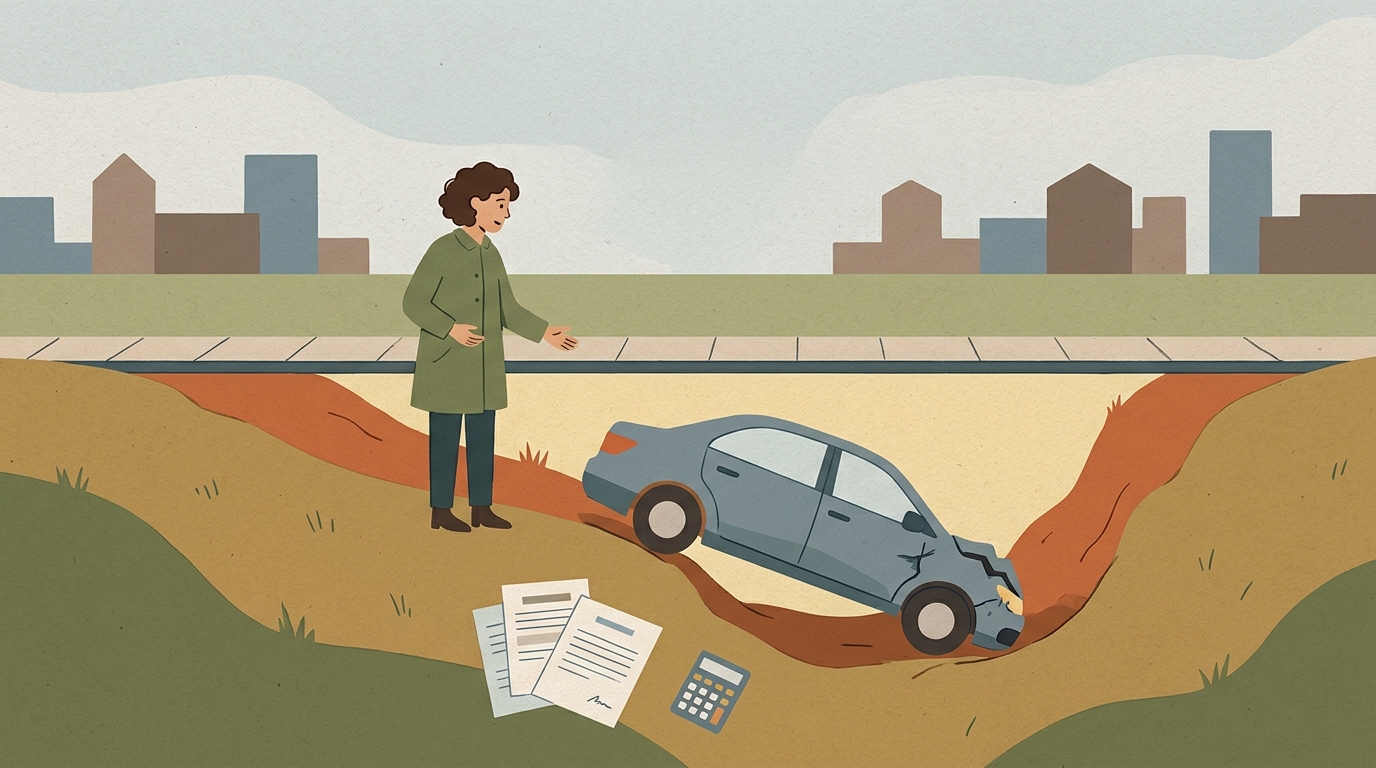
Gap insurance pays the difference between what your car was worth when it was totaled or stolen and what you still owe on the loan or lease (Insurance.com). No state lists it among its minimum requirements — New York, North Carolina and New Jersey all leave it optional, and New York goes further by barring dealers and lenders from making it a condition of the deal (Insurify, 2026).
It matters when your payoff balance sits above the car's actual cash value: a thin down payment, rolled-in negative equity, a long term, or a lease. Added to an existing auto policy it averages about $88 a year (Insure.com, 2026); bought at the dealership it is usually a flat $500 to $700 (TFLcar, June 2025).
What Gap Insurance Actually Covers
Gap insurance is optional coverage, sold either as an endorsement on your auto policy or as a product financed through a dealer or lender. It applies only after your comprehensive or collision coverage settles a total loss — a theft, or damage the insurer declares unrepairable. Your primary insurer pays actual cash value: the depreciated market value at the moment of loss, not what you paid and not what you owe. Gap addresses the deficiency balance left on the retail installment contract or lease after that payment reaches the loss payee or lienholder.
The money goes to the lender, not to the named insured. It retires debt; it does not hand you equity.
Caps are set by each filing, not by a national standard. Protective Asset Protection's GAP product, for example, also reimburses the policyholder's primary auto insurance deductible up to $1,000 and caps the GAP benefit itself at up to $50,000 (Protective Asset Protection). Other filings do neither. Watch also for a near-twin: loan/lease payoff coverage, sometimes sold under the gap label, typically pays 25 percent of the vehicle's actual cash value rather than the full remaining balance (AutoInsurance.com). If your deficiency is larger than that 25 percent, the endorsement name on your declarations page matters more than the price.
What it does not cover: late fees, skipped-payment fees and other amounts added to the loan balance after origination are excluded (Skyla Credit Union). It is not repair coverage — a partial-loss claim is settled by collision, and gap pays nothing. It does not cover mechanical breakdown, or a loan on a vehicle you no longer carry comprehensive and collision on.
Availability is uneven. GEICO currently does not offer gap insurance as an add-on (The Zebra), so some customers must look to a lender or dealer product. In Texas, the Department of Insurance publishes a list of companies authorized to offer GAP coverage in the state, identified by NAIC company number. In New York, a dealer not licensed as an insurance agent or broker may not sell gap insurance at all, though it may offer a gap waiver under certain conditions (New York State Department of Financial Services, February 2005); under New York Insurance Law Section 1101(b)(3) the charge to the lessee or debtor for that waiver may not exceed the creditor's or lessor's own cost of gap coverage (DFS, March 2008). Whether a particular loss is covered depends on the filed language in your endorsement or waiver contract, adjudicated case by case.
Who Needs This Coverage
Check each of these against your paperwork — the loan or lease contract, the latest statement, and the declarations page.
- You lease. Leasing companies typically require full coverage with maximum deductible limits on comprehensive and collision, and may also require gap coverage to pay the difference if the amount owed exceeds the car's value after a total loss (U.S. News & World Report). That requirement sits in your lease contract, not in state law.
- Your down payment was smaller than first-year depreciation. Most cars lose 20% of their value in the first year (Kelley Blue Book, via Policygenius). Put down less than that and your balance starts above actual cash value.
- Negative equity from a trade-in was rolled into the new loan. Look for a payoff-to-prior-lender line on the purchase order — that is debt against a car you no longer own.
- You financed tax, title, dealer fees, an extended service contract or a tire-and-wheel package into the amount financed. None of those sit inside the vehicle's actual cash value.
- Your ten-day payoff quote exceeds a market value estimate for your exact year, trim and mileage, or your amortization schedule shows interest consuming most of each early payment.
- Your insurer does not file the endorsement — GEICO currently does not (The Zebra) — and you are relying on a dealer or credit union product you have not read.
What It Costs
There is no single average to compare against: the NAIC does not publish a separate average premium figure for gap insurance, and the only reliable number is an individual quote (Truvo). Price moves with how you buy it (policy endorsement versus a one-time dealer fee), which insurer's filing applies, the vehicle's value and loan amount, and the state the product is filed in. A quote is not a bound premium.
| How you buy it | Specific scenario | Published price |
|---|---|---|
| Endorsement on an existing auto policy | Typical add-on across insurers (Insure.com, 2026) | About $88 per year |
| Endorsement on an existing auto policy | Full quoted spread reported by an agent (Jimmi Lewis, CarInsurance.com) | $35 to $208 per year |
| Lowest-priced carriers in one comparison | Nationwide and Travelers (ValuePenguin) | Around $50 per year, described as about 80% less than Farmers and Erie, the priciest in that analysis |
| Carriers named cheapest in a separate analysis | USAA, Vermont Mutual, Mapfre Insurance (Insure.com, 2026) | Listed among the cheapest; quote required |
| Dealership product rolled into the loan | Flat fee at signing (TFLcar, June 2025) | $500 to $700, which can accrue interest if financed |
| New York lease or loan, dealer-offered waiver | Charge capped by New York Insurance Law 1101(b)(3) (NY DFS, March 2008) | May not exceed the lessor's or creditor's own cost of gap coverage |
How to Get or File It
- Get the ten-day payoff figure from your lender or lessor in writing and compare it to an actual cash value estimate for your exact year, trim and mileage. If the payoff is lower, there is no gap to insure.
- Check your declarations page for comprehensive and collision. Gap endorsements and most dealer waivers only operate on top of a total-loss settlement from those coverages. If you lease, confirm the deductible limits your lease contract requires (U.S. News & World Report).
- Ask your insurer for the endorsement by name, and ask three things: is it full deficiency gap or loan/lease payoff paying 25 percent of actual cash value (AutoInsurance.com); does it reimburse your primary deductible and to what cap — Protective Asset Protection's is up to $1,000, with the GAP benefit capped at up to $50,000; and is there a maximum loan-to-value or vehicle age limit in the filing.
- If your carrier does not sell it — GEICO currently does not (The Zebra) — price the dealer or credit union product against the roughly $88 a year an endorsement averages (Insure.com, 2026) and the $500 to $700 flat dealer fee that accrues interest if rolled into the loan (TFLcar, June 2025).
- Verify the seller is authorized. In Texas, check the Department of Insurance's published list of companies authorized to offer GAP coverage by NAIC company number. In New York, an unlicensed dealer may not sell gap insurance and may only offer a gap waiver under set conditions (NY DFS, February 2005).
- Refuse any attempt to make it a condition of financing, then confirm it landed on the policy. New York Personal Property Law Section 302A(1) provides that no retail installment contract may be conditioned on the buyer obtaining motor vehicle debtor gap insurance (NY DFS, March 2008), and New Jersey buyers may decline a dealer's offer (Insurify, 2026). Check the reissued declarations page for the endorsement and the lienholder as loss payee, and ask about cancellation and any pro-rata refund once your payoff drops below the car's value.
Questions
Is gap insurance required by law anywhere?
Not as a state minimum. North Carolina does not include gap insurance in its minimum auto insurance requirements, New Jersey does not require it and lets buyers decline a dealer's offer, and New York prohibits dealers and lenders from making it a condition of a lease or loan (Insurify, 2026). A lease contract can still require it privately — leasing companies commonly do (U.S. News & World Report).
Does gap insurance pay my collision deductible too?
Only if the specific filing says so. Protective Asset Protection's GAP product reimburses the primary auto insurance deductible up to $1,000 and caps the GAP benefit at up to $50,000 (Protective Asset Protection). Other filings include no deductible reimbursement at all, so read your endorsement or waiver contract.
Is dealership gap insurance a bad deal?
Compare the prices directly. Dealer gap is typically a flat $500 to $700 and can accrue interest if rolled into the loan (TFLcar, June 2025); an endorsement averages about $88 a year (Insure.com, 2026) and has been quoted between $35 and $208 a year (agent Jimmi Lewis, CarInsurance.com). In New York, a dealer waiver charge may not exceed the creditor's or lessor's own cost of gap coverage under Insurance Law 1101(b)(3) (NY DFS, March 2008).
What if my insurer doesn't sell gap coverage?
GEICO currently does not offer it as an add-on (The Zebra). Options are a lender or credit union product, a dealer gap waiver where state law permits, or a carrier that files the endorsement — Nationwide and Travelers were lowest-priced in one comparison at around $50 a year (ValuePenguin), and USAA, Vermont Mutual and Mapfre were named among the cheapest in another (Insure.com, 2026). Get quotes on your own car and ZIP code.
Will gap cover payments I missed before the accident?
No. GAP coverage does not pay additional funds or late and skip fees added to the loan balance (Skyla Credit Union). Those amounts stay with you even if the deficiency itself is addressed, and any claim is adjudicated against the filed contract language case by case. The NAIC publishes no separate average premium for gap, so the only reliable price is your own quote (Truvo).