By the Drivers Compass editors · Updated October 31, 2026
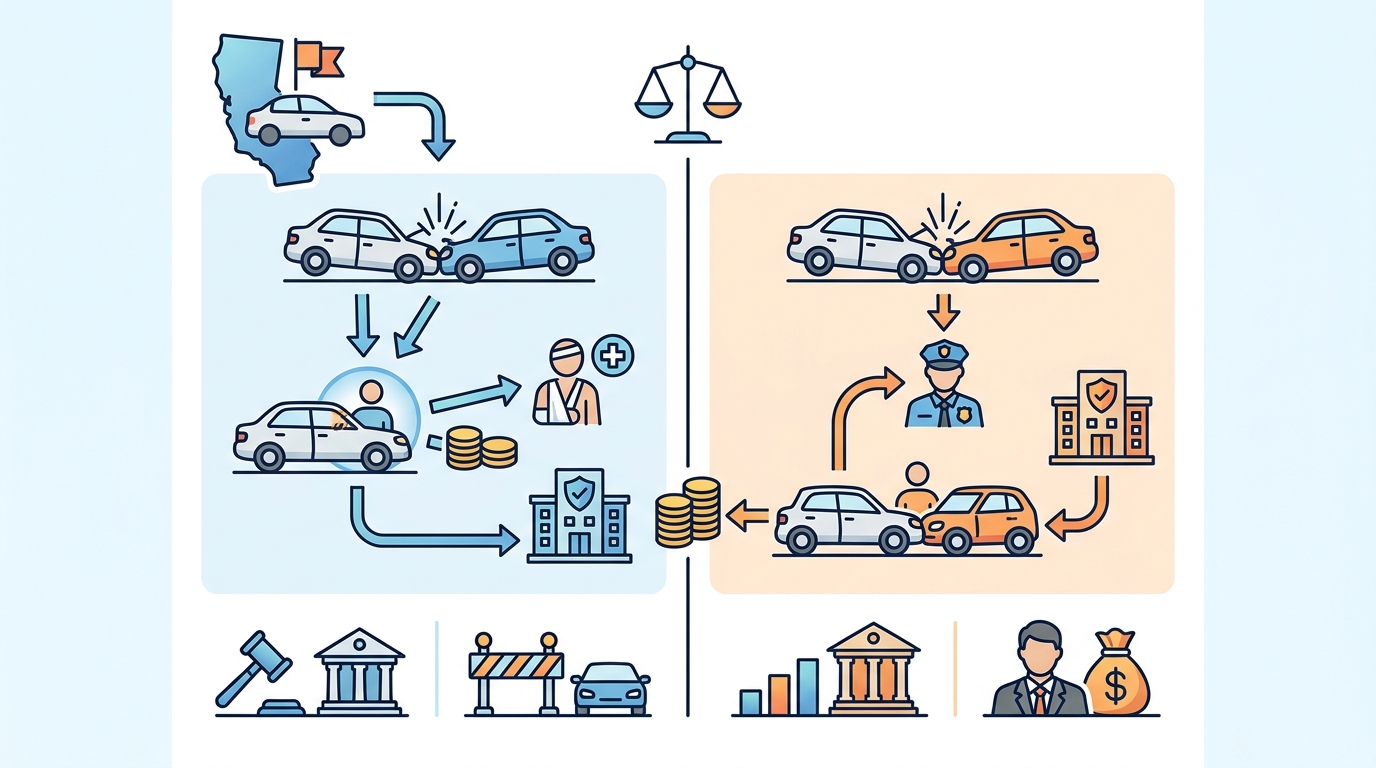
Twelve states run a no-fault auto insurance system, and three at-fault states also require personal injury protection (PIP) coverage (Experian, 2025-02-09). Everywhere else, plus Washington, D.C., uses an at-fault system in which the driver who caused the crash is financially responsible for the injuries (Experian, 2025-02-09).
That single difference changes who you file your injury claim with, what coverages you are legally obliged to buy, and how much of your own medical bill your own policy picks up before anyone argues about fault. Liability limits themselves are set state by state and are written as a three-number split, such as Maine's 50/100/25 rule (Insurance.com).
Minimum Liability Limits, All 50 States
The bodily injury and property damage split — the three numbers like 50/100/25 — is fixed by each state's own financial responsibility statute, and the figures are revised by legislatures from time to time. Rather than print a number that may have changed in your state since your last renewal, the split column below points you to the single-state guide, which carries the statutory citation and the effective date. The one split given here is Maine's, commonly described as the 50/100/25 rule (Insurance.com).
The PIP column reflects whether the state legally requires personal injury protection, which is a separate question from whether it is a no-fault state.
| State | Bodily Injury/Property Damage Split | PIP Required (Y/N) | UM/UIM Required (Y/N) |
|---|---|---|---|
| Alabama | See state guide | N | See state guide |
| Alaska | See state guide | N | See state guide |
| Arizona | See state guide | N | See state guide |
| Arkansas | See state guide | N (offered as optional) | See state guide |
| California | See state guide | N | See state guide |
| Colorado | See state guide | N | See state guide |
| Connecticut | See state guide | N | See state guide |
| Delaware | See state guide | Y (per-person and total limits) | See state guide |
| District of Columbia | See state guide | N | See state guide |
| Florida | See state guide | Y | See state guide |
| Georgia | See state guide | N | See state guide |
| Hawaii | See state guide | Y (per passenger) | See state guide |
| Idaho | See state guide | N | See state guide |
| Illinois | See state guide | N | See state guide |
| Indiana | See state guide | N | See state guide |
| Iowa | See state guide | N | See state guide |
| Kansas | See state guide | Y (medical expenses) | See state guide |
| Kentucky | See state guide | Y (per person) | See state guide |
| Louisiana | See state guide | N | See state guide |
| Maine | 50/100/25 | N | See state guide |
| Maryland | See state guide | Y (reasonable expenses) | See state guide |
| Massachusetts | See state guide | Y (per person per accident) | See state guide |
| Michigan | See state guide | Y (driver chooses limits) | See state guide |
| Minnesota | See state guide | Y (medical and non-medical) | See state guide |
| Mississippi | See state guide | N | See state guide |
| Missouri | See state guide | N | See state guide |
| Montana | See state guide | N | See state guide |
| Nebraska | See state guide | N | See state guide |
| Nevada | See state guide | N | See state guide |
| New Hampshire | See state guide | N (offered as optional) | See state guide |
| New Jersey | See state guide | Y (per person per accident) | See state guide |
| New Mexico | See state guide | N | See state guide |
| New York | See state guide | Y (medical expenses) | See state guide |
| North Carolina | See state guide | N | See state guide |
| North Dakota | See state guide | Y (per person) | See state guide |
| Ohio | See state guide | N | See state guide |
| Oklahoma | See state guide | N | See state guide |
| Oregon | See state guide | Y (per person) | See state guide |
| Pennsylvania | See state guide | Y | See state guide |
| Rhode Island | See state guide | N | See state guide |
| South Carolina | See state guide | N | See state guide |
| South Dakota | See state guide | N (offered as optional) | See state guide |
| Tennessee | See state guide | N | See state guide |
| Texas | See state guide | N (offered as optional) | See state guide |
| Utah | See state guide | Y (per person) | See state guide |
| Vermont | See state guide | N | See state guide |
| Virginia | See state guide | N (offered as optional) | See state guide |
| Washington | See state guide | N (offered as optional) | See state guide |
| West Virginia | See state guide | N | See state guide |
| Wisconsin | See state guide | N | See state guide |
| Wyoming | See state guide | N | See state guide |
PIP entries above follow the state-by-state breakdown published by Experian on 2025-02-09, including the six at-fault states that offer PIP as an option: Arkansas, New Hampshire, South Dakota, Texas, Virginia and Washington.
Keep two lists separate in your head. What the state requires is the split in column two plus any mandatory PIP or UM/UIM. What a lender or lessor requires is contractual, not statutory — financed and leased vehicles are typically also required by the loan or lease agreement to carry comprehensive and collision coverage with a deductible cap, and no state minimum liability law obliges you to carry physical damage coverage on your own car.
No-Fault vs. Tort States
No-fault states (12 total, including the three choice states below)
Florida, Hawaii, Kansas, Kentucky, Massachusetts, Michigan, Minnesota, New Jersey, New York, North Dakota, Pennsylvania and Utah (Experian, 2025-02-09). In these states you file your own injury claim with your own PIP coverage first regardless of who caused the crash, and your ability to sue the other driver for pain and suffering is limited unless your injuries clear the threshold your state's statute sets.
The PIP requirement is not written the same way in each of them: Hawaii's applies per passenger, Massachusetts's and New Jersey's per person per accident, Kentucky's, North Dakota's and Utah's per person, Kansas's and New York's to medical expenses, Minnesota's split between medical and non-medical expenses, and Michigan's lets the driver choose the policy limits (Experian, 2025-02-09).
Choice no-fault states (3): Kentucky, New Jersey, Pennsylvania
Drivers in these three states may opt out of the no-fault system and choose tort insurance instead (Experian, 2025-02-09). The election you sign at purchase decides whether you claim through your own PIP with a restricted right to sue, or keep full tort rights and pursue the at-fault driver's liability insurer. Read the election form — it is a lasting decision about your legal rights, not a billing preference.
At-fault/tort states (38 states plus Washington, D.C.)
Alabama, Alaska, Arizona, Arkansas, California, Colorado, Connecticut, Delaware, Georgia, Idaho, Illinois, Indiana, Iowa, Louisiana, Maine, Maryland, Mississippi, Missouri, Montana, Nebraska, Nevada, New Hampshire, New Mexico, North Carolina, Ohio, Oklahoma, Oregon, Rhode Island, South Carolina, South Dakota, Tennessee, Texas, Vermont, Virginia, Washington, West Virginia, Wisconsin, Wyoming and the District of Columbia (Experian, 2025-02-09). Here the at-fault driver is financially responsible for the injuries they cause, so the injury claim is filed against that driver's liability coverage and settlement turns on proving fault.
Three of those at-fault states still require PIP on top: Maryland for all reasonable expenses, Oregon per person, and Delaware with per-person and total limits (Experian, 2025-02-09).
Regional Patterns in Coverage Requirements
The clearest pattern in the table is geographic clustering of the PIP requirement. Eight of the 15 states that require PIP sit in the Northeast and upper Midwest — Massachusetts, New York, New Jersey, Pennsylvania, Delaware, Maryland, Michigan, Minnesota, plus Kansas and North Dakota on the Plains (Experian, 2025-02-09). Outside Florida, not one Southern state requires PIP: Alabama, Georgia, Mississippi, Louisiana, South Carolina, North Carolina and Tennessee all sit in the at-fault group with no PIP mandate.
The plausible reason is legislative timing rather than geography itself. No-fault statutes were adopted in a concentrated wave by state legislatures that were reacting to the same problem at the same time: dense urban corridors where injury litigation absorbed a large share of every claim dollar and payouts to injured people arrived slowly. States with heavy traffic density and high litigation volumes — the Boston–New York–Philadelphia corridor, Detroit, the Twin Cities — had the strongest loss-cost case for routing medical bills through first-party coverage and capping the right to sue. States without that profile had less reason to rewrite their tort law and never did.
Florida is the Southern exception and fits the same logic for a different reason: a large seasonal and visiting-driver population producing crashes between parties who are hard to pursue through a fault-based claim, which makes first-party medical coverage an attractive fix.
The second pattern worth noting is how the at-fault states split on optional PIP. Arkansas, New Hampshire, South Dakota, Texas, Virginia and Washington all offer PIP as an option rather than mandating it (Experian, 2025-02-09) — the coverage exists in the filed product, but your state left the decision to you. If you live in one of those six, declining PIP is a choice you may have made by default on a quote screen, not a restriction your state imposed. Those elections are often signed in writing, so check your declarations page for the waiver.
Look Up Your State's Full Requirements
Each single-state guide carries the statutory split written in the state's own format, the citation it comes from, the effective date of any change, and whether PIP and UM/UIM are mandatory, optional or waivable in writing.
Northeast
- Connecticut requirements
- Maine requirements
- Massachusetts requirements
- New Hampshire requirements
- New Jersey requirements
- New York requirements
- Pennsylvania requirements
- Rhode Island requirements
- Vermont requirements
South
- Alabama requirements
- Arkansas requirements
- Delaware requirements
- District of Columbia requirements
- Florida requirements
- Georgia requirements
- Kentucky requirements
- Louisiana requirements
- Maryland requirements
- Mississippi requirements
- North Carolina requirements
- Oklahoma requirements
- South Carolina requirements
- Tennessee requirements
- Texas requirements
- Virginia requirements
- West Virginia requirements
Midwest
- Illinois requirements
- Indiana requirements
- Iowa requirements
- Kansas requirements
- Michigan requirements
- Minnesota requirements
- Missouri requirements
- Nebraska requirements
- North Dakota requirements
- Ohio requirements
- South Dakota requirements
- Wisconsin requirements
West
- Alaska requirements
- Arizona requirements
- California requirements
- Colorado requirements
- Hawaii requirements
- Idaho requirements
- Montana requirements
- Nevada requirements
- New Mexico requirements
- Oregon requirements
- Utah requirements
- Washington requirements
- Wyoming requirements
Questions
I'm moving from Florida to Georgia. What actually changes on my policy?
The injury side changes completely. Florida is a no-fault state with a PIP requirement, so your own PIP pays your medical bills first regardless of fault (Experian, 2025-02-09). Georgia is an at-fault state with no PIP mandate, so an injury claim is made against the at-fault driver's liability coverage and depends on establishing fault (Experian, 2025-02-09). Your Florida PIP will not follow you; you will need a Georgia policy written to Georgia's statutory split, and you should look hard at medical payments and uninsured/underinsured motorist coverage to replace what PIP was doing for you. Check your new state's guide for the current split and effective date before you bind anything.
Does "no-fault" mean nobody is held responsible for the crash?
No — it only decides who pays your medical bills first. In Michigan, a no-fault state where drivers choose their own PIP limits, your injury claim starts with your own insurer (Experian, 2025-02-09), but the police report and the property damage claim still assign fault, and your right to sue survives above the threshold your state's statute sets. In Maryland, an at-fault state that nonetheless requires PIP for all reasonable expenses (Experian, 2025-02-09), you have PIP to draw on and no statutory restriction on suing the at-fault driver. Two states, both with mandatory PIP, two different sets of legal rights.
Why do Maryland, Oregon and Delaware require PIP if they are at-fault states?
Because mandatory PIP and no-fault are separate legislative decisions. Maryland requires PIP for all reasonable expenses, Oregon per person, and Delaware with per-person and total limits — all three while remaining at-fault states (Experian, 2025-02-09). Compare Texas and Washington, also at-fault, where PIP is offered but optional (Experian, 2025-02-09). A Texas driver can decline the same coverage an Oregon driver must carry, so moving between those states can change your out-of-pocket exposure after a crash even though both use the same fault-based liability system.
Is the minimum liability split the same in neighbouring states?
Not reliably. Maine's financial responsibility law sets a minimum commonly described as the 50/100/25 rule (Insurance.com), and nothing obliges New Hampshire or Vermont next door to use the same three numbers — each state's legislature sets its own, and several have revised them in recent years. Treat the split as state-specific and read it in the state's own format rather than rounding it in your head. If you are financed or leasing, remember the lender's comprehensive and collision requirement sits on top of whatever the state demands, and it is a contract term, not a statute.