By the Drivers Compass editors · Updated October 31, 2026
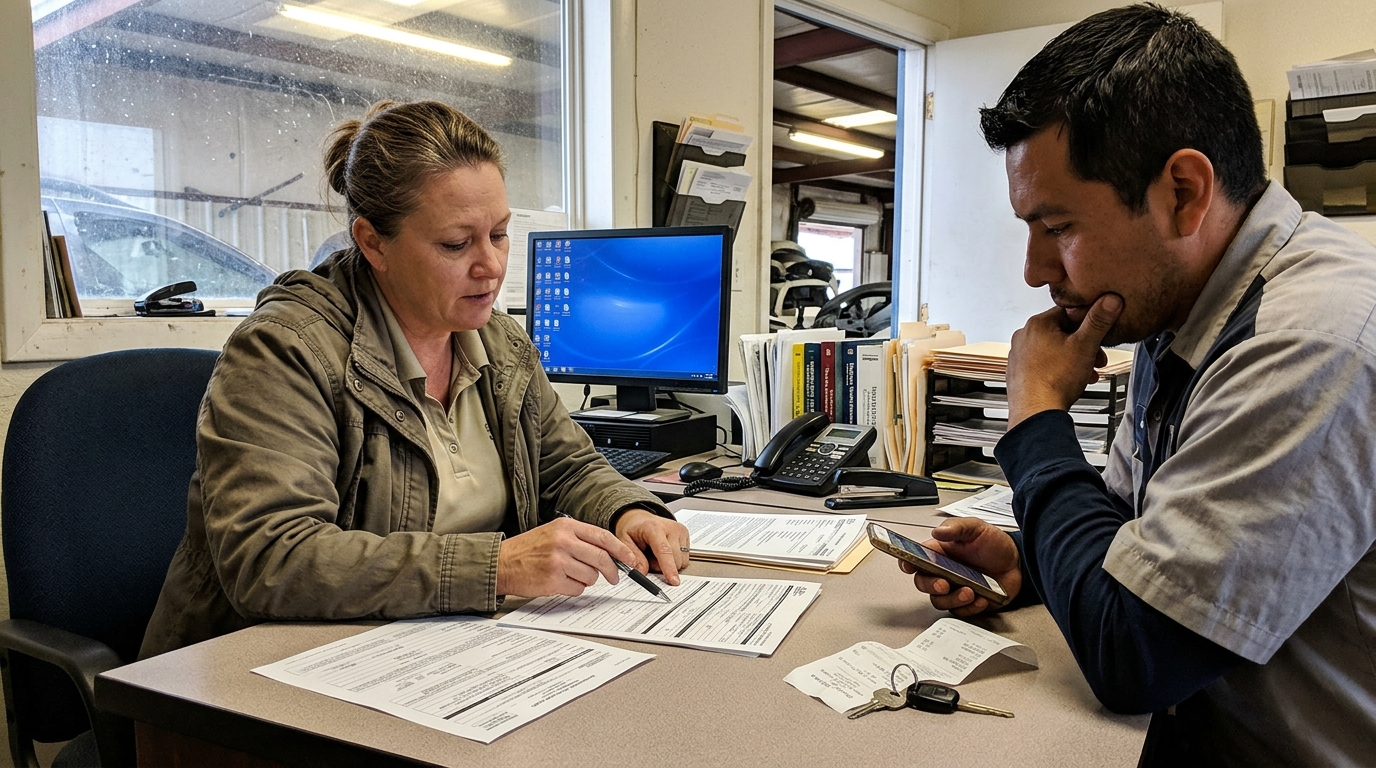
Texas auto claims are governed by the Texas Insurance Code and by the terms of your own policy. The Texas Department of Insurance (TDI) regulates insurers doing business in Texas and takes complaints about auto, homeowners, health, life and other insurance (Sutliff & Stout, undated), and its recommended first step is to talk to the company or agent directly, using the toll-free help line on your policy or TDI's Help Line at 800-252-3439, before you complain (Texas Department of Insurance, undated).
If you do file, TDI contacts the company and gives it 25 days to respond (Millin Millin Law Firm, undated). What TDI cannot do matters as much: it cannot make a company pay a claim unless not paying violates a law or the terms of the policy (Texas Department of Insurance, undated).
State Claims-Handling Regulations
Two bodies of Texas law matter when an auto claim goes wrong. The Texas Insurance Code sets the claim-handling duties an insurer owes on a first-party claim — the claim you make on your own policy. Chapter 541 of the Texas Insurance Code covers unfair or deceptive acts in the business of insurance, and the Office of the Texas Attorney General's Consumer Protection Division reviews insurance practices and complaints for possible violations of that chapter or of the Texas Deceptive Trade Practices–Consumer Protection Act, and may sue in the name of the State of Texas (Office of the Texas Attorney General, undated).
The regulator is the Texas Department of Insurance, which regulates insurance companies doing business in Texas and takes complaints about auto, homeowners, health, life and other insurance (Sutliff & Stout, undated). TDI — not the Office of Public Insurance Counsel — handles individual complaints against insurance companies, agents and adjusters (Coverage Classroom, undated).
Be clear which kind of claim you have, because your rights differ:
- First-party claim. You claim under your own policy — collision, comprehensive, uninsured/underinsured motorist, personal injury protection or medical payments. Your insurer owes you the policy's Duties After Loss and Loss Payment conditions, and the Insurance Code duties run in your favour.
- Third-party claim. You claim against the at-fault driver's insurer, which has no contract with you. TDI states plainly that it cannot help with complaints against another person's insurance company (Texas Department of Insurance, undated).
The exact day counts for acknowledging, investigating and paying or denying a Texas claim sit in the claim-handling provisions of the Texas Insurance Code. Confirm the current count in the code text or with TDI's Help Line at 800-252-3439 (Coverage Classroom, undated) before you build an argument on a specific number — the deadline that applies depends on when notice was received and what the policy requires you to submit.
Key Deadlines and Requirements
The Texas time limit that is fixed and easy to verify is the complaint response window. Treat the rest as checkpoints and date every letter, because a timeline built from dated documents is what a regulator or lawyer can act on.
| Action | Applies to | Time limit | Source |
|---|---|---|---|
| Talk to the insurer or agent first, via the toll-free line on the policy or TDI at 800-252-3439 | First- and third-party | No fixed limit; TDI's recommended first step | Texas Department of Insurance, undated |
| Gather policy number, insurance card copy, adjuster and agent names, claim number, date of loss, description of the problem, the resolution you think is fair, supporting documents | First-party | Before filing with TDI | Sutliff & Stout, undated |
| TDI contacts the insurer; insurer must respond | Complaint against a TDI-regulated company | 25 days | Millin Millin Law Firm, undated |
| Insurer acknowledges, investigates, accepts or denies | First-party auto claim | Set by the claim-handling provisions of the Texas Insurance Code — confirm the current day count in the code or with TDI | Coverage Classroom, undated |
Two limits on the complaint route. TDI cannot make a company pay a claim unless not paying violates a law or the terms of the policy, and it cannot settle disputes when you and the company disagree about the facts (Texas Department of Insurance, undated). A fight over repair cost, prior damage or fault is not something a TDI complaint resolves; the policy's Appraisal clause, mediation or litigation are the routes for that.
What's Different From Neighboring States
Texas borders Oklahoma, Arkansas, Louisiana and New Mexico, and each writes its own claim-handling rules. The sharpest contrast is with Oklahoma, where the deadlines are spelled out in the administrative code and several are counted in business days, not calendar days.
Acknowledging the claim. Oklahoma requires every property and casualty insurer to acknowledge receipt of a claim notice within 30 business days unless payment is made in that period, under OAC 365:15-3-5(a) (Oklahoma Insurance Department, undated); its statutes likewise require acknowledgment within 30 days after notification unless paid, under 36 O.S. (Addison Law, undated). Texas sets its acknowledgment duty in the Texas Insurance Code, so pull the Texas count from the code before comparing.
Completing the investigation. Oklahoma requires investigation to be completed within 45 business days under OAC 365:15-3-6, and if it is not, the insurer must send a letter explaining why more time is needed at 45 days from initial notification and every 45 days after (Oklahoma Insurance Department, undated).
Accepting or denying, then paying. In Oklahoma a first-party claimant must be advised of acceptance or denial within 45 business days after the insurer receives a properly executed proof of loss, under OAC 365:15-3-7(a)(1) (Oklahoma Insurance Department, undated), and the standard policy provision calls for payment within 60 days after receipt of that proof of loss and after the covered loss amount is ascertained (ClaimSpot, undated).
Written responses and offers. Oklahoma's Unfair Claims Settlement Practices Act, 36 O.S. § 1250.1 et seq., requires an adequate response within 30 days of a pertinent written communication reasonably suggesting a response is expected (ALFA International, undated). Section 3629(B) requires a written settlement offer or rejection to the insured within 60 days; breaching that 60-day period does not by itself trigger bad-faith liability but can support attorney fees (ALFA International, undated).
Who enforces. Oklahoma's claims-handling Act gives claimants no private suit for response-timing violations — the Oklahoma Insurance Department enforces them (Addison Law, undated). Texas pairs TDI's regulatory role with Chapter 541 of the Texas Insurance Code and the Texas Deceptive Trade Practices–Consumer Protection Act, under which the Attorney General's Consumer Protection Division may sue in the name of the State of Texas (Office of the Texas Attorney General, undated). For Arkansas, Louisiana and New Mexico, read each state's own code; none track the Texas or Oklahoma counts.
Where to File a Complaint
Work through these in order. Each step produces a record you can use at the next one.
- The insurer's claims channel. Call the toll-free customer help line on your policy and ask the claims adjuster, in writing, for the policy language and the reason behind the decision. TDI treats talking to the company or agent as the first step (Texas Department of Insurance, undated). This gets you a written denial or valuation to attach to everything later.
- TDI Help Line — 1-800-252-3439. TDI's consumer help line answers questions about how insurance works in Texas and whether your situation looks like a regulatory issue (Coverage Classroom, undated; Texas Department of Insurance, undated). Use it if you are unsure whether your dispute is a coverage question or a factual disagreement.
- TDI Consumer Protection — formal complaint. File online, by email, or by mail to Texas Department of Insurance, Consumer Protection, MC 111-1A, P.O. Box 149091, Austin, TX 78714-9091 (Sutliff & Stout, undated). Have ready your policy number and a copy of your insurance card, the names of the agents or adjusters involved, your claim number and the date of the accident or loss, a description of the problem, the resolution you think is fair, and supporting documents (Sutliff & Stout, undated). TDI then gives the company 25 days to respond (Millin Millin Law Firm, undated).
- Office of the Texas Attorney General, Consumer Protection Division. It reviews insurance practices and complaints for possible violations of the Texas Deceptive Trade Practices–Consumer Protection Act or Chapter 541 of the Texas Insurance Code and may sue in the name of the State of Texas (Office of the Texas Attorney General, undated). It acts on patterns of conduct, not as a substitute for your individual claim.
Written demand to the adjuster — template
Re: Claim [claim number], Policy [policy number], Date of loss [date] I request in writing: (1) the specific policy provision relied on to [deny / limit] this claim, quoted and identified by section; (2) a copy of the estimate or valuation report supporting your figure of [$ amount offered]; (3) the name and license number of the adjuster who made the decision. I enclose [list documents]. Please respond in writing to [address].
If the dispute is about the dollar amount rather than coverage, check your policy for an Appraisal clause. Whether a lawsuit, an appraisal demand or a Chapter 541 claim fits your facts is a question for a Texas-licensed attorney.
Questions
How long does the insurer have to respond once I complain to TDI?
After you file, the Texas Department of Insurance contacts the company and gives it 25 days to respond (Millin Millin Law Firm, undated). That is a response to TDI, not a deadline to pay you. TDI cannot make a company pay a claim unless not paying violates a law or the terms of the policy (Texas Department of Insurance, undated).
Can TDI help with a claim against the other driver's insurer in Texas?
No. The Texas Department of Insurance states it cannot help with complaints about another person's insurance company (Texas Department of Insurance, undated). That is a third-party claim and you have no contract with that insurer. TDI complaints work best on first-party claims under your own Texas policy — collision, comprehensive, uninsured/underinsured motorist, PIP or medical payments. Help Line: 1-800-252-3439 (Coverage Classroom, undated).
Does Texas allow bad-faith or unfair-practice claims against an insurer?
Texas recognises statutory claims under Chapter 541 of the Texas Insurance Code and the Texas Deceptive Trade Practices–Consumer Protection Act; the Office of the Texas Attorney General's Consumer Protection Division reviews insurance complaints for violations of either and may sue in the name of the State of Texas (Office of the Texas Attorney General, undated). Whether your facts support a private action, and the filing deadline, are questions for a Texas-licensed attorney.